The core difference
In hand embroidery, a person places every stitch. In machine embroidery, a machine follows a programmed pattern. That single difference affects speed, consistency, cost and visual character.
Speed
Machines are dramatically faster for repeatable designs. Hand embroidery is slower because the maker physically moves the needle and thread through the fabric. Large or highly detailed hand pieces can take many hours, days or longer.
Consistency
Machine embroidery excels at repetition. If a business needs the same logo embroidered hundreds of times, consistency is an advantage. Hand embroidery naturally contains small variations in spacing and direction.
Control and improvisation
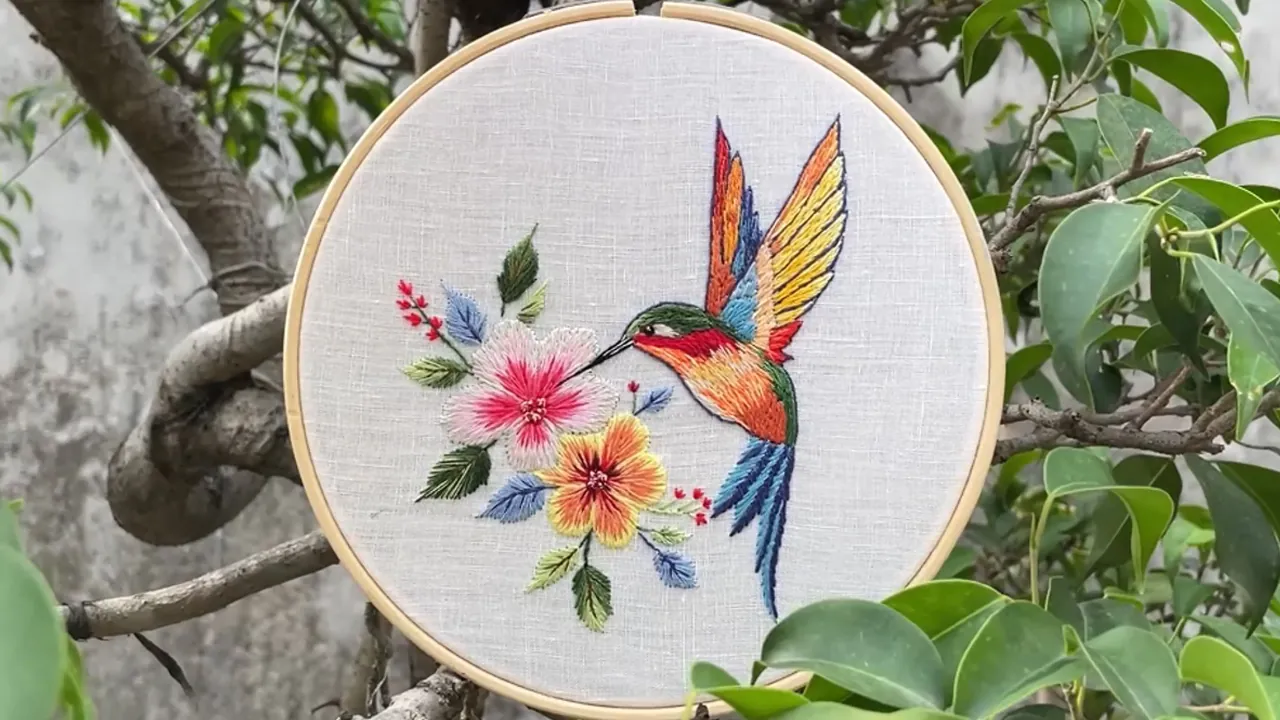
A hand embroiderer can change direction, density or colour while working. That flexibility matters in painterly or highly individual pieces. A machine can also create complex results, but the complexity is encoded in the design file and machine setup.
Cost
Handmade work generally includes far more human time per piece, so it should not be compared with machine embroidery only by price. Machine embroidery is often the practical choice for volume. Hand embroidery is often chosen for uniqueness, craft value and the maker's touch.
How can you tell?
- Look for tiny variations rather than perfectly repeated stitch patterns.
- Examine how thread direction follows the shapes.
- Ask who made it and how long it took.
- Do not assume “imperfect” automatically means handmade; quality hand embroidery can be extremely precise.
Which is better?
There is no universal answer. A school uniform logo and a one-off embroidered artwork solve different problems. The useful question is whether the process matches what you value: speed and repeatability, or individual hand work and time.
What each method is especially good at
Machine embroidery is excellent for logos, uniforms, repeated motifs and production where consistency matters. Hand embroidery is especially suited to one-off work, expressive surfaces, fine manual adjustment and objects whose value includes the maker's time.
Why machine work can still be high quality
Machine-made does not mean poor. Good digitizing, thread choice, fabric stabilization and machine setup require knowledge. The point of comparison is not to dismiss one method; it is to describe the different labour and decisions involved.
Why hand embroidery can vary in price so much
Two handmade pieces of the same size may require very different amounts of work. Fine detail, dense coverage, subtle colour blending and the maker's level of skill all matter. Size alone is a poor way to estimate labour.
Questions to ask when buying
Ask whether the piece was stitched entirely by hand, whether any machine process was used, who made it and whether the seller knows roughly how the work was produced. Clear answers are more useful than marketing labels such as “artisan style.”