Hands-on cultural ideas in Tam Coc
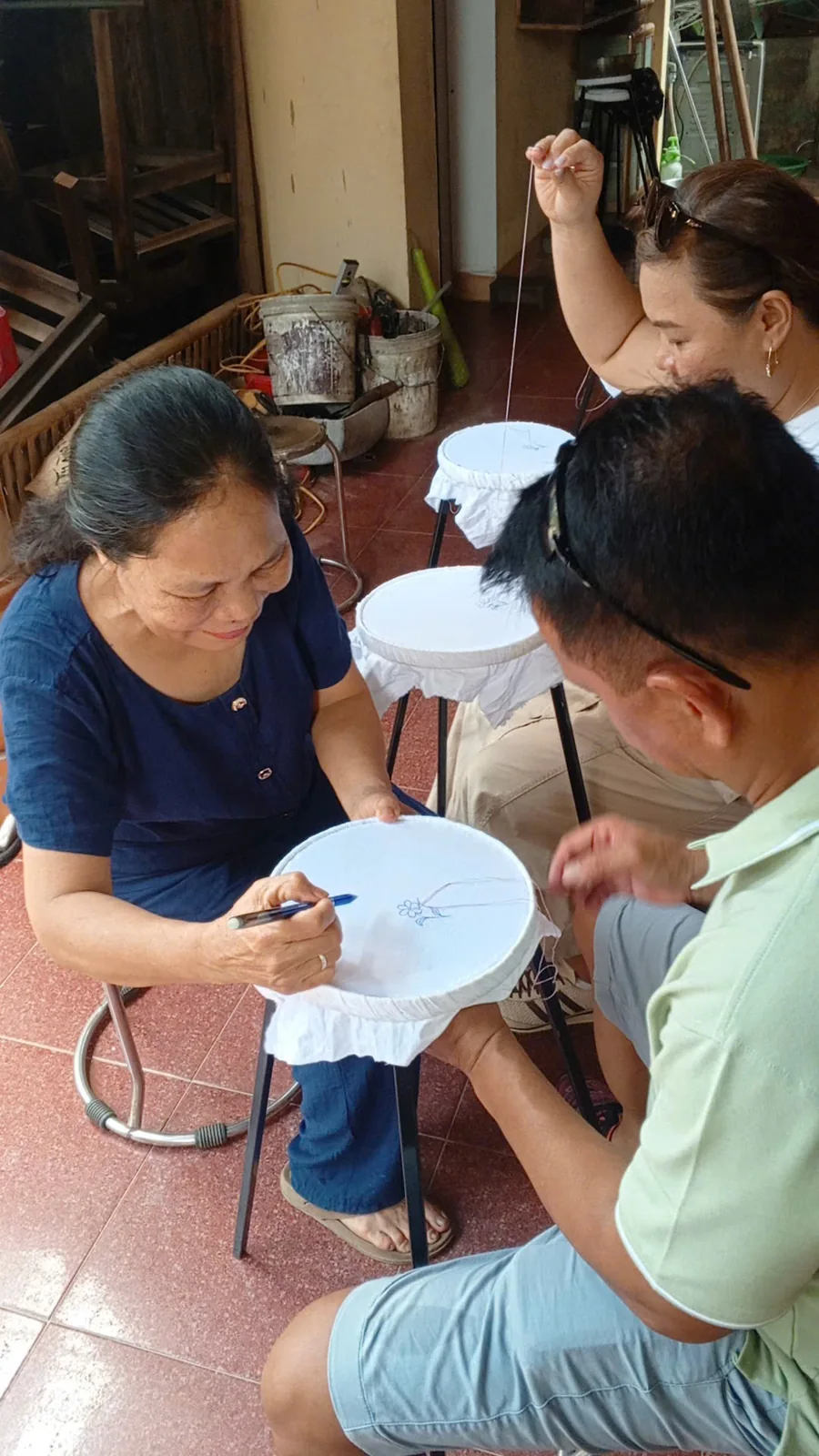
1. Learn traditional hand embroidery
Embroidery works especially well as a hands-on cultural experience because the technique is visible and immediately tryable. A beginner can learn a few stitches in one session while also seeing what separates first attempts from decades of experience.
2. Join a cooking or drink-making activity
Food workshops can be useful when they explain ingredients and everyday context rather than only producing a finished dish. Look for small groups and enough time to do the preparation yourself.
3. Cycle through the village landscape
Cycling is not a formal “class,” but it creates direct contact with the geography around Tam Coc. Move slowly enough to notice how homes, fields, temples and tourism businesses fit together.
4. Learn through conversation
Some of the best cultural learning is not scheduled. Ask a craftsperson how they learned. Ask why a motif is difficult. Ask what has changed in the village. Respectful curiosity often produces better memories than a scripted performance.
How to judge a hands-on experience
Look for four things: a real person with the skill, enough time to participate, a clear connection to the place, and a group size that allows interaction. Avoid activities where “hands-on” means touching something for two minutes after watching someone else do all the work.
Why participation changes your understanding
Once you struggle to keep stitches even or control thread tension, the finished artwork looks different. Doing creates a reference point. That is the value of a good hands-on experience.
Small groups make a difference
Participation needs space and attention. In a large group, it is easy for an experience to become a demonstration with only a few people doing the meaningful steps. Small groups make questions, correction and conversation much easier.
Do not expect mastery in one session
The best short experiences are honest about scale. You can learn how a process works, complete a simple task and understand what makes advanced work difficult. Claims that you will “master” a traditional craft in an hour usually undersell the craft rather than elevate the experience.
Choose experiences that leave a memory beyond a photo
A finished object, a new technique, a recipe you can explain or a conversation you remember gives the experience a longer life. That is one reason making a small embroidered piece can work well: you carry the evidence of the activity with you.
Questions worth asking your host
- How did you learn this?
- Which part is hardest for beginners?
- Has the craft changed since you were young?
- What should I look at in a really good example?
These questions invite first-hand knowledge rather than a rehearsed list of facts.