A village story reaching back to the Tran period
Vietnamese cultural sources describe Van Lam embroidery as a craft with more than 700 years of history. The traditional account places its beginnings in the 13th century, when the Tran royal family had connections with the Vu Lam area.
The story of Lady Tran Thi Dung
According to local tradition, Lady Tran Thi Dung — wife of Tran Thu Do — taught weaving and embroidery skills to local people. This story remains part of how the village explains the origin of its craft. Because it is transmitted as local tradition, responsible writing should identify it that way rather than presenting every detail as independently verified modern history.
From useful textiles to skilled decorative work
Embroidery was not originally about tourism. It was work: a practical skill that could produce decorated textiles and support household income. As markets changed, products changed too. Makers adapted motifs and objects while keeping the manual skill.
Why the family household mattered
Craft knowledge often survived because it was present in everyday life. Children saw adults working. They learned how to hold fabric, choose thread and correct mistakes by watching. Over years, a household could become both home and workshop.
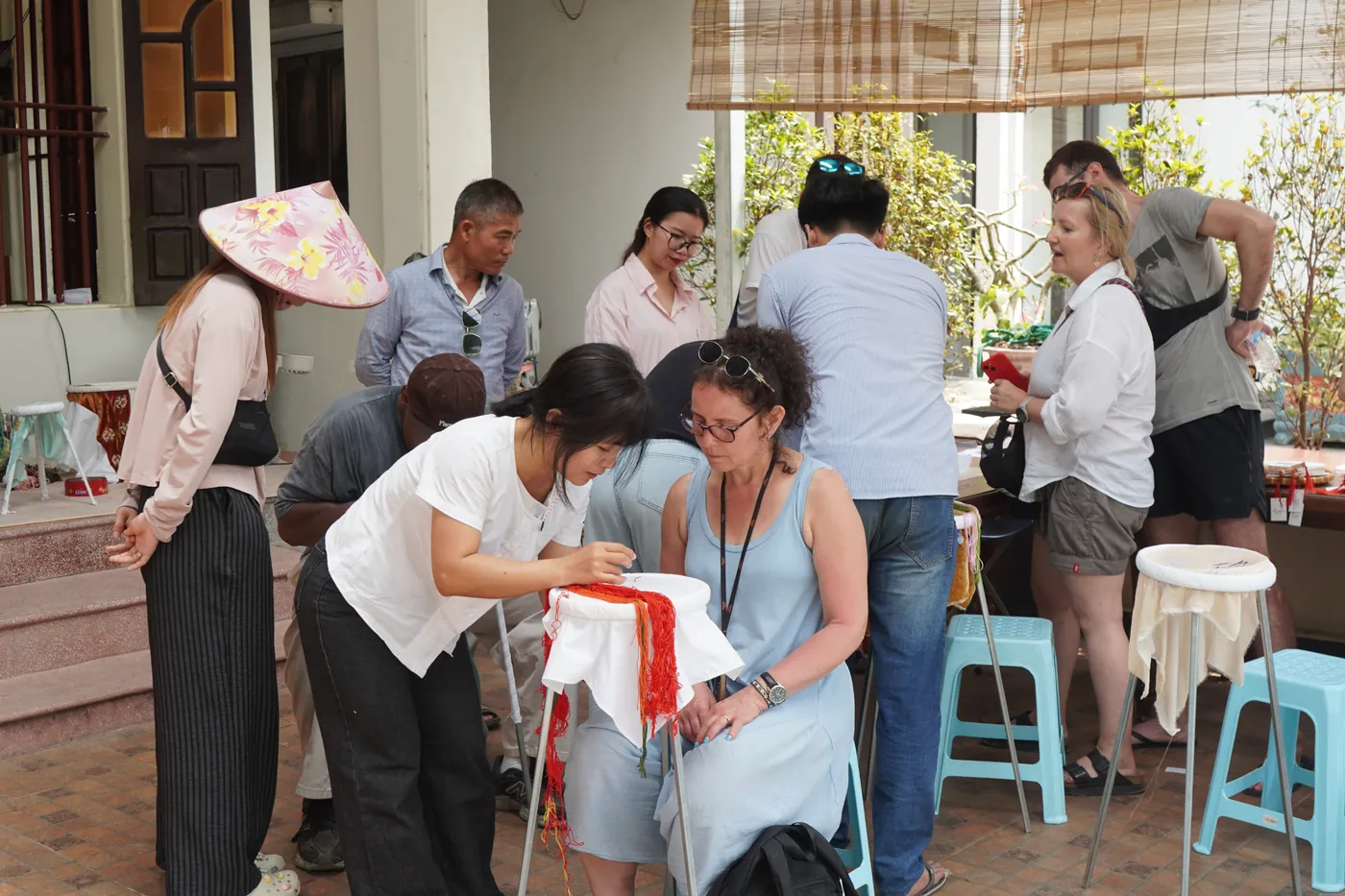
Tourism changed the audience
Tam Coc brought a new audience to Van Lam. Visitors could see embroidery, buy it, and eventually take part in short learning experiences. That creates opportunity, but it also creates a challenge: the craft can be reduced to a quick attraction if the story and skill are not explained carefully.
What continuity looks like in one family
Our family has carried embroidery through four generations. Dinh Thi Nguyen has worked with needle and thread for more than five decades. In 2015 she was awarded the Ninh Binh provincial title for a traditional handicraft artisan in embroidery and lace. Today she still embroiders and teaches the next generation.
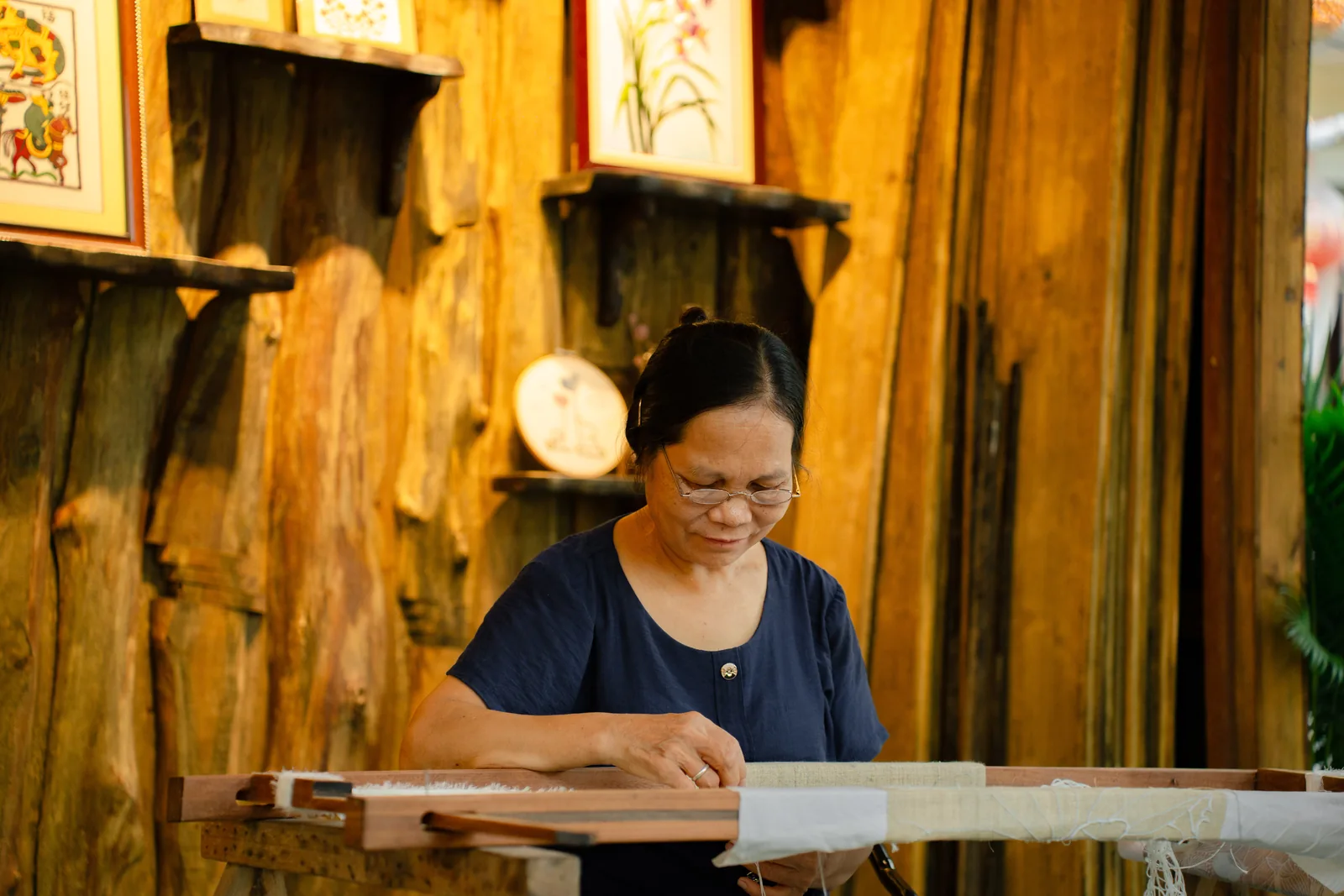
The story is still unfinished
Traditional crafts survive when they remain useful, teachable and valued. A village does not preserve embroidery simply by talking about the past. Someone still has to pick up the needle.
For practical visitor information, see our Van Lam Embroidery Village guide.
History, tradition and careful wording
Craft history often combines documented events, local memory and stories repeated across generations. They should not be treated as the same kind of evidence. For Van Lam, official tourism sources and Vietnamese media consistently describe a centuries-old embroidery tradition and repeat the local account involving Lady Tran Thi Dung. We preserve that distinction when we tell the story to guests.
The 20th century brought another textile skill
Sources about Van Lam also describe lace-making being introduced in the early 20th century by villagers who learned the technique and brought it home. That added another layer to the village's textile identity and is one reason modern descriptions often say “embroidery and lace.”
Craft changed with the market
Household textiles, decorative pieces, clothing and tourist-oriented products do not all serve the same customer. Makers have always had to respond to demand. Adaptation is not evidence that a tradition is fake; it is often how a working craft remains economically possible.
The difficult part of preservation
Young people need reasons to invest the time required to become skilled. A craft can be praised as heritage while still becoming harder to sustain as a livelihood. Tourism can help by creating customers and students, but only if the craft is valued for more than a quick photo opportunity.
Why family stories matter
Large historical narratives explain where a tradition came from. Family stories show how it actually survives. One person teaching another, correcting a hand position or explaining why a colour is wrong may look small, but those moments are the mechanism of continuity.