Meaningful souvenir ideas from Ninh Binh
1. Hand embroidery from Van Lam
Embroidery is closely connected with Van Lam in the Tam Coc area. A small hand-embroidered piece can be practical, decorative or framed. Ask whether the piece is hand stitched and, if possible, who made it.
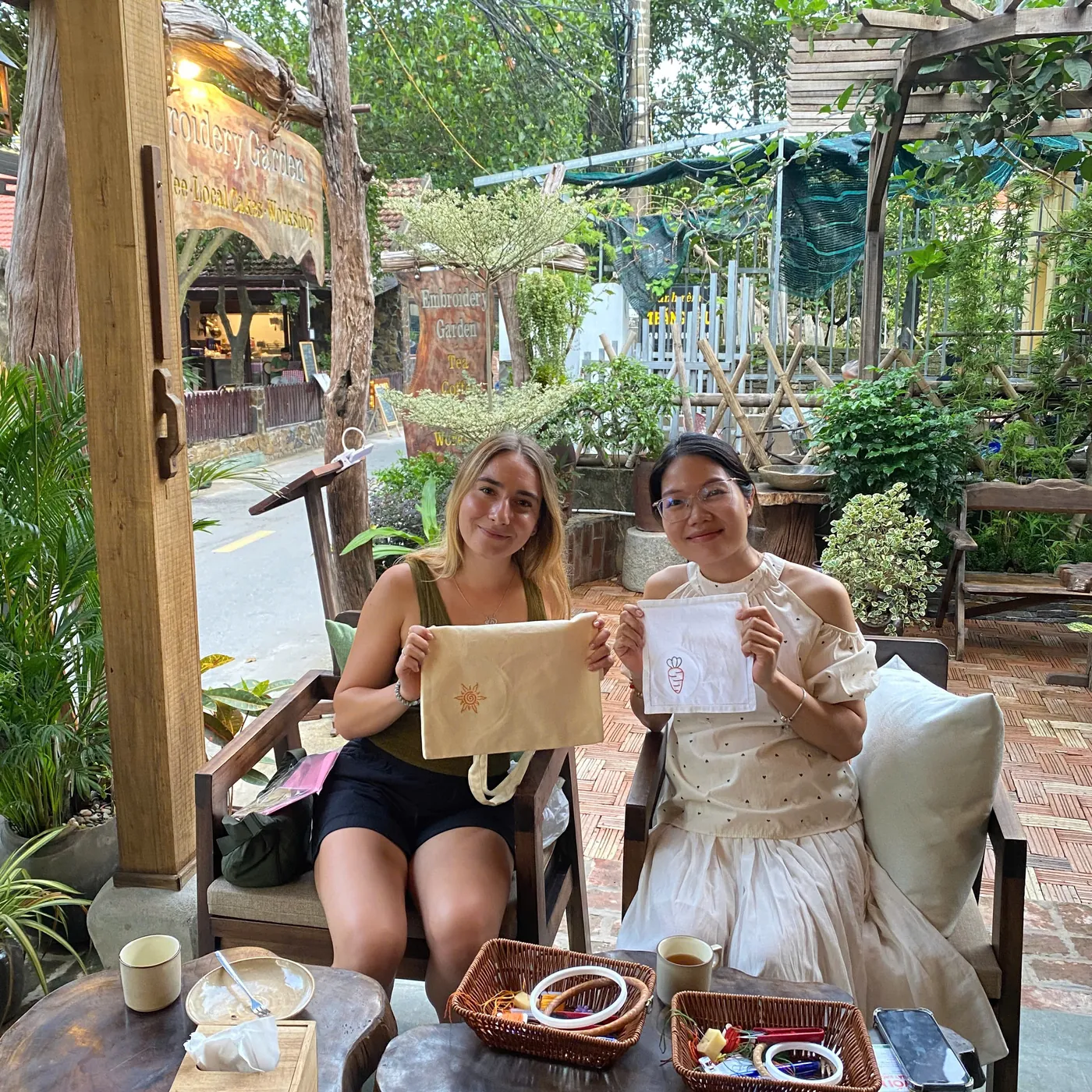
2. Something you embroidered yourself
A self-made piece may not be the most technically perfect souvenir, but it can carry the strongest memory. A tote, handkerchief, cap or T-shirt with a small design is easy to pack and easy to explain when someone asks about it later.
3. Sedge products from Kim Son
Kim Son's sedge tradition is connected to materials grown in the district. Woven objects can include household and decorative products. Choose pieces that are useful enough to keep rather than buying only because they are light.
4. Pottery and stone craft
Bo Bat pottery and Ninh Van stone carving are part of Ninh Binh's craft landscape. Larger stone pieces are obviously impractical for most travelers, but small craft objects can still carry a direct connection to local making traditions.
How to choose a meaningful souvenir
- Can you explain where it came from?
- Do you know whether it was actually made locally?
- Will you use, display or remember it?
- Does the price make sense for the amount of hand work claimed?
Do not confuse “handmade style” with handmade
Tourist areas sell many objects that look traditional. There is nothing wrong with machine-made products when they are sold honestly. The problem is only when a mass-produced item is represented as individual hand work.
Meaningful does not have to mean expensive
A small object can carry more story than a large decorative purchase. Price should reflect materials, labour and skill, but emotional value comes from understanding what the object is and why you chose it.
Think about your suitcase before you buy
Fragile pottery, heavy stone and large framed artwork may be beautiful but impractical for a long trip. Textiles have an obvious travel advantage: they are light, flexible and easy to protect. If you fall in love with a larger piece, ask about safe packing before buying.
Ask for the maker story, not a sales story
Useful questions are concrete: Who made it? Was it stitched by hand? Where was it made? What material is this? Vague answers about “Vietnamese tradition” tell you less than one specific detail about the process.
Souvenirs for people who say they do not need souvenirs
Choose something functional: a small textile item, a bag, a piece you can frame later, or something you made yourself. The goal is not to accumulate objects. It is to bring home one thing that still makes sense after the trip is over.