More than five decades with needle and thread
Dinh Thi Nguyen began learning embroidery when she was young. The skill became part of her working life and has remained with her for more than 50 years.
Recognized as a traditional handicraft artisan
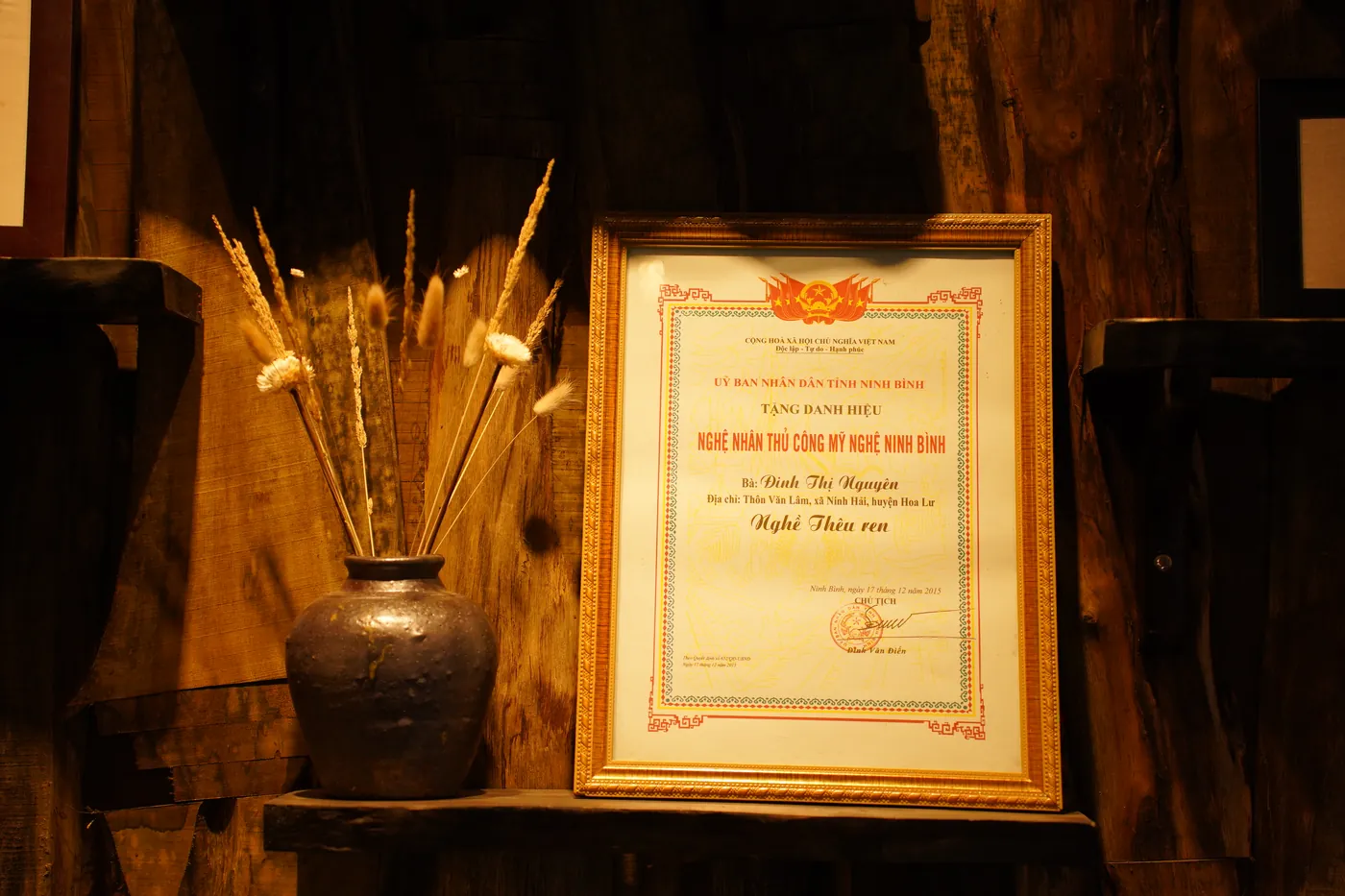
In 2015, the People's Committee of Ninh Binh Province awarded her the title of traditional handicraft artisan for embroidery and lace. The certificate remains displayed in our family space.
What experience changes
After decades, many actions become almost invisible: judging tension by feel, changing thread direction to shape a petal, choosing a slightly different shade, or seeing early that a line is going wrong. Those are difficult skills to explain only in words.
Embroidery as calm, focused work
For her, embroidery can also be relaxing. The attention narrows to the next stitch, the next small section and the rhythm of the hands. That quiet concentration is one reason visitors often enjoy trying the craft even when they have never sewn before.
Sharing the craft with visitors
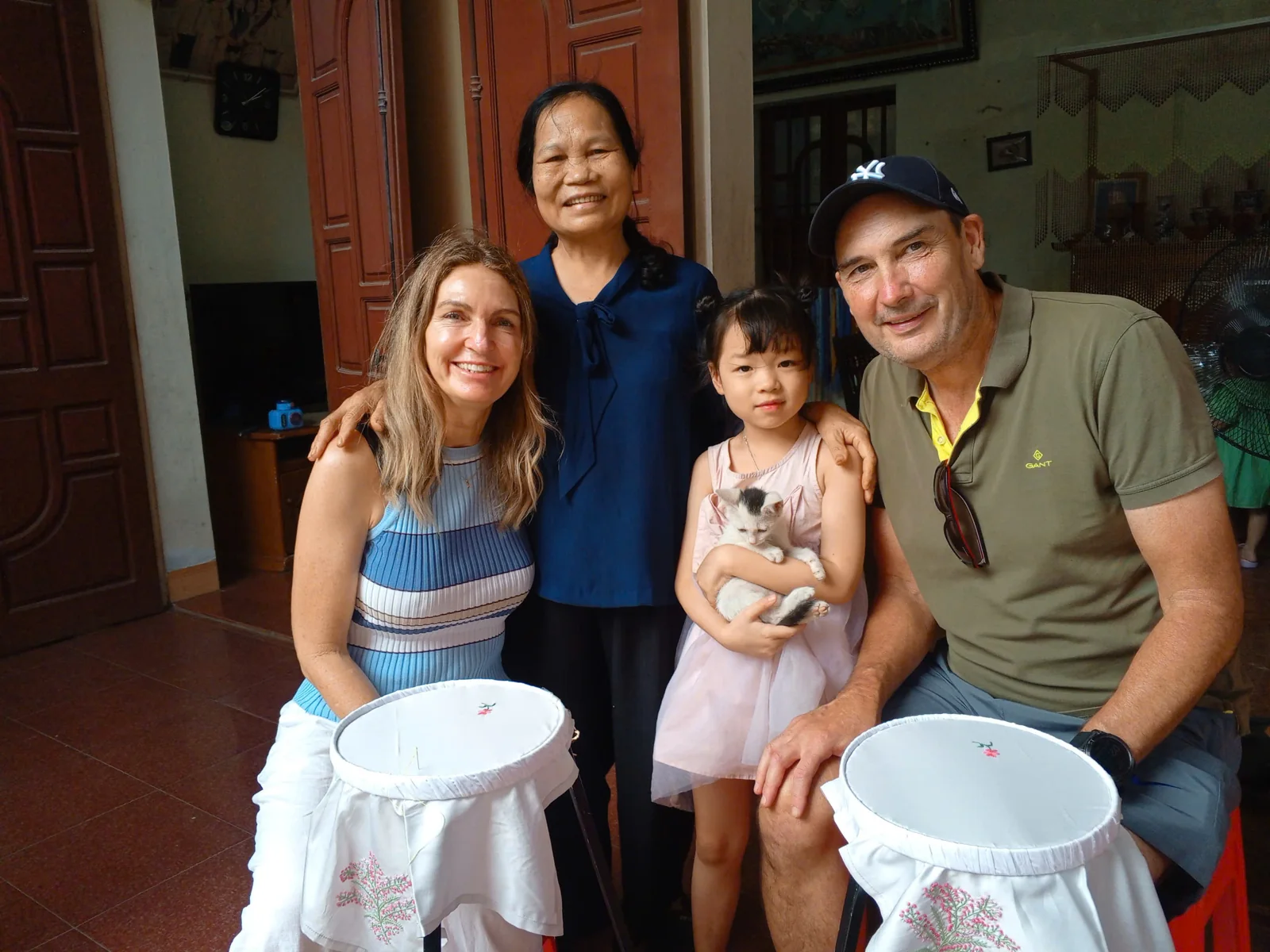
Today, guests can watch her work, see finished pieces and learn basic techniques in the same family environment where the craft continues. The aim is not to turn a lifetime of skill into a two-hour lesson. It is to let visitors understand a little of what the work requires.
Passing it on
Our family's embroidery tradition spans four generations. Today, she is teaching the next generation as well. That transfer of knowledge — person to person — is what makes a living craft different from a display about the past.
What visitors can learn from watching an experienced artisan
The most useful thing is often not a special “secret stitch.” Watch the economy of movement. Experienced hands use less unnecessary motion, hold the fabric consistently and make tiny corrections before a problem grows. That efficiency comes from repetition over many years.
Why recognition matters — and what it does not mean
The 2015 artisan title is an important part of her story because it is formal recognition from Ninh Binh Province. But a certificate is not the whole reason we value her work. The deeper evidence is the body of work, the years of practice and the knowledge she can still demonstrate and teach.
Her role in the workshop
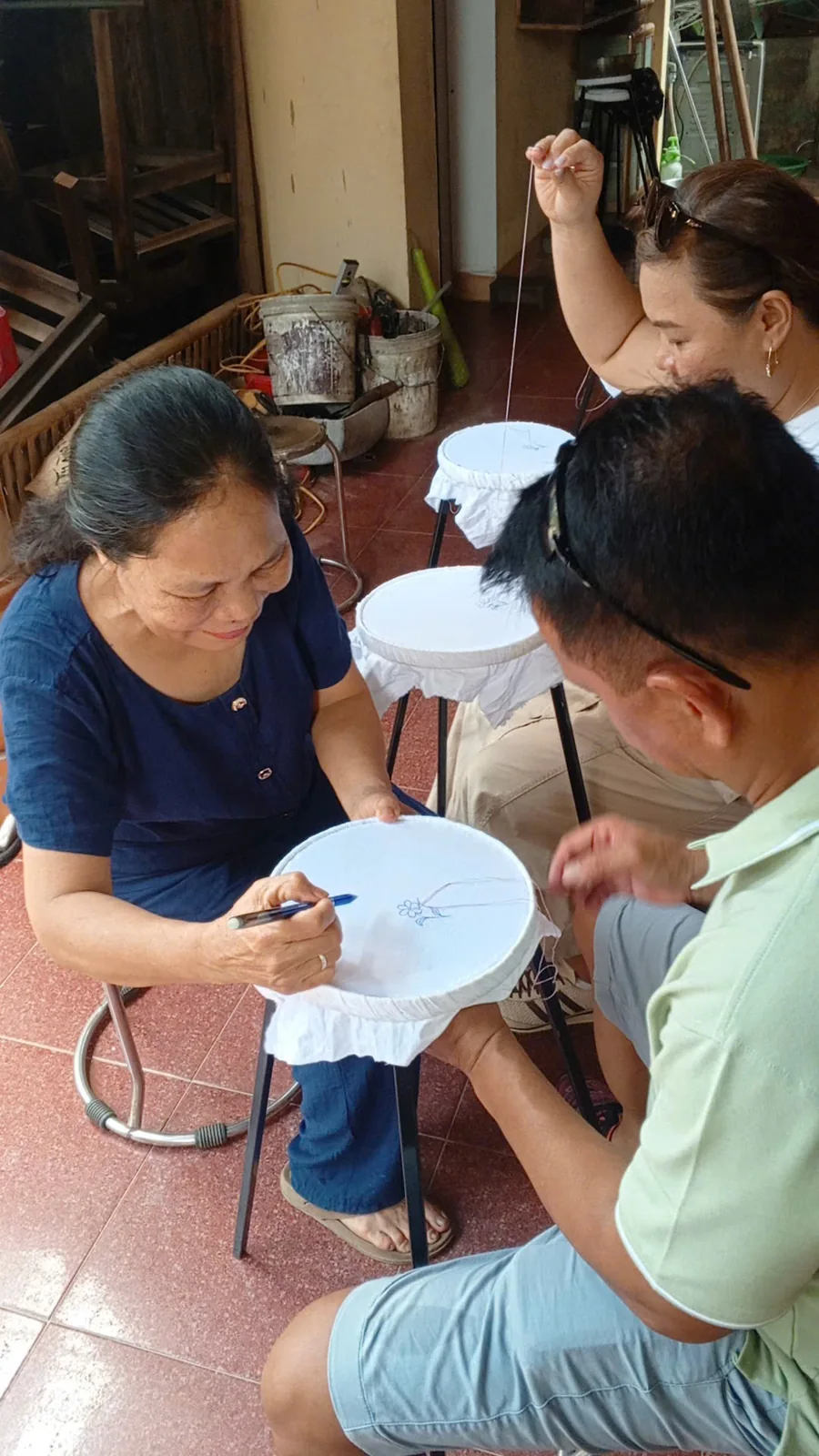
Guests may see her embroidering, receive technique guidance or hear parts of the family story through us. We translate when needed so visitors can ask questions without turning the interaction into a staged speech. Some days are more conversational than others; it is still a working family environment.
What we hope visitors notice
We hope people leave understanding that “handmade” is a description of labour, not only an aesthetic. The calm appearance of embroidery hides concentration, repetition and thousands of small movements. Meeting the maker puts a human scale on that time.